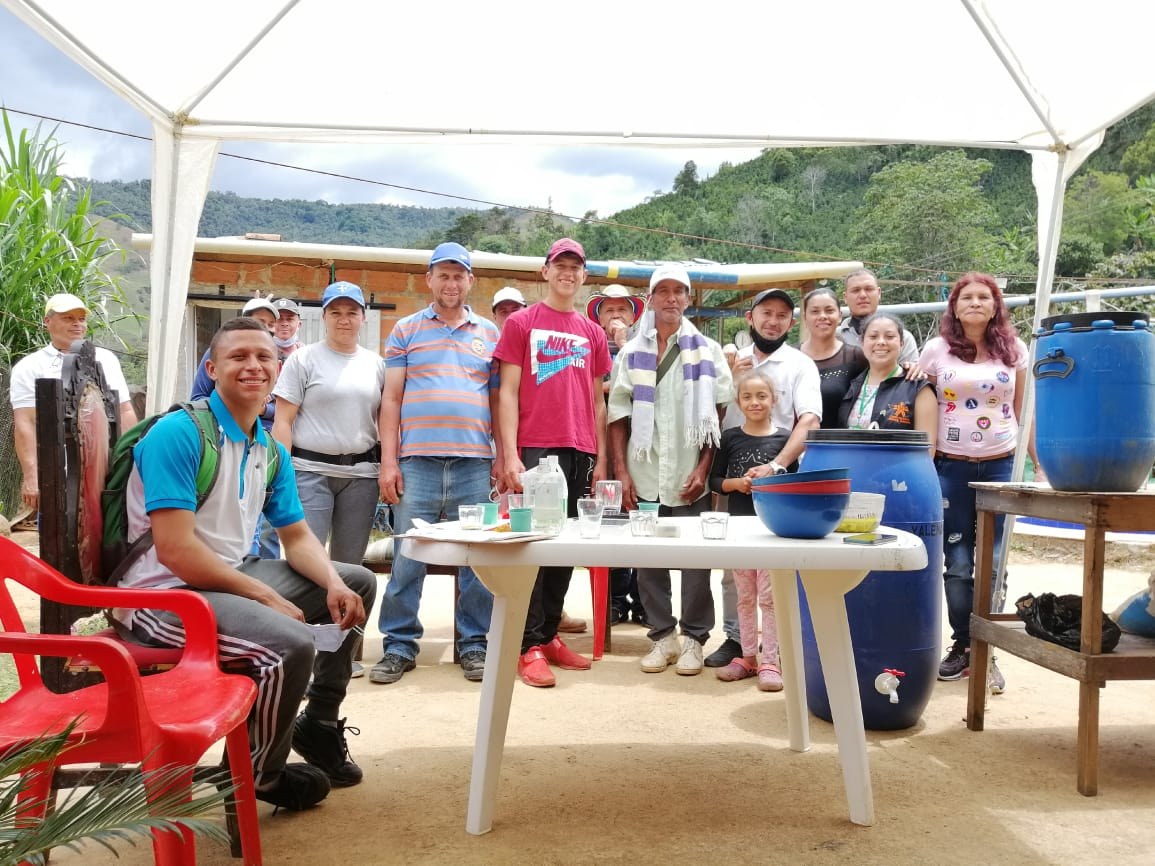
There is a bridge outside Caicedo, Antioquia called El Vaho. In 2002, people stood on it with nothing in their hands and stopped armed men from taking their coffee.
That sentence is the reason this town matters, and the reason we buy coffee from it.
A town under siege
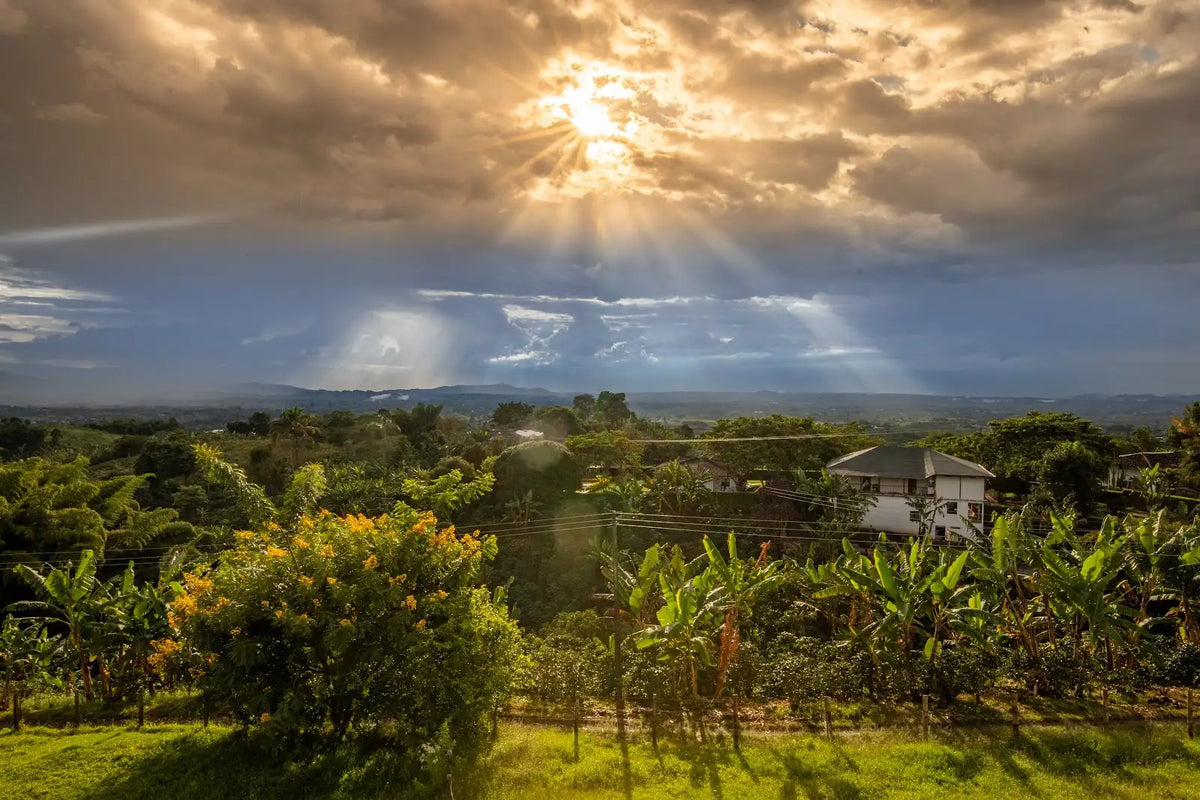
Caicedo is small — around 8,000 people, in the Occidente subregion of Antioquia, high in the mountains west of Medellín. Coffee is what grows there. In the late 1990s and early 2000s, it was territory held between the FARC and paramilitary groups, and the harvest was a target. Coffee was the only thing of value moving down those roads, which made the trucks worth stopping.
The coffee caravans
The community's answer was not to arm itself. It was to walk.
In 2002, residents organised what became known as the caravanas del café — coffee caravans. When armed groups moved to seize trucks loaded with the harvest, the people of Caicedo linked arms across the road and refused to move. No weapons. No negotiation. Just a line of farmers and their families standing between the guns and the coffee.
It worked three times.
On the fourth caravan, it did not. The harvest was taken. The community stood anyway.
The march, and what it cost
What happened in Caicedo was noticed. Guillermo Gaviria Correa, then Governor of Antioquia, saw a community that had invented nonviolent resistance on its own, out of necessity, and decided to walk to them.
In April 2002 he led the Marcha de la Noviolencia — a march on foot to Caicedo. It was the first time a sitting, elected Colombian leader had put forward nonviolence as a practical route rather than an idea.
On 21 April 2002, at the El Vaho bridge, the FARC kidnapped Governor Gaviria and his peace adviser, Gilberto Echeverri Mejía, during that march. Both men were held for more than a year. Both were killed on 5 May 2003.
What the town did next
Caicedo did not abandon the idea the two men died for. It voted on it.
The municipality confirmed its commitment to nonviolence by popular referendum in 2007, and again in 2013. In 2014 it was formally proclaimed el primer municipio Noviolento de Colombia — the first non-violent municipality in Colombia.
The community now maintains a permanent memory project with Colombia's Centro Nacional de Memoria Histórica, telling the story in its own words. Their phrase for it is fuimos, somos y seremos noviolentos — we were, we are, and we will be nonviolent.
The coffee
Caicedo still grows coffee. It grows very good coffee.
The producers there are organised through Aprokafe, an association led by Elkin Diosa that runs a community buying centre, an on-site quality-control lab, and training programmes in tree nutrition and processing. It exists so that small growers can reach specialty buyers directly instead of selling into the commodity market at whatever price they are offered.
The lot we buy is washed, grown between 1,950 and 2,100 metres, Caturra, Castillo and Cenicafé varieties, and it cups at SCA 84+. Milk chocolate, honey, yellow fruits, vanilla.
Our supplier's own name for this lot is Resiliencia. Resilience. Given where it comes from, that is not marketing.
We sell it as The O.G., the coffee the whole company is built around.
Read it from the source
We would rather you heard this from the people it happened to than from a coffee company. The community's own account, and Colombia's national memory archive, are here:
- Caicedo, memoria viva de Noviolencia — Centro Nacional de Memoria Histórica
- Caicedo: primer municipio Noviolento de Colombia — CNMH
- caicedonoviolento.com — the community's own site
- ¿Por qué Caicedo? — Gobernación de Antioquia
Every bag of The O.G. is coffee from a town that decided, twice and by vote, that it would not answer violence with violence. We think that is worth knowing while you drink it.

Leave a comment
This site is protected by hCaptcha and the hCaptcha Privacy Policy and Terms of Service apply.